

By Maria Grasmick
February 2026

When New York City Mayor Zohran Mamdani declared, “We are forced to raid the Rainy Day Fund” it was clear to me the threat.
Two paths.
A preferred path taxing the wealthy.
A last resort raiding reserves and raising property taxes. If he does not get money from Albany.
The language was measured. Responsible. Inevitable.
But political language always deserves inspection.
The Framing of “No Choice”
Public officials often present difficult fiscal decisions as unavoidable.
“Two paths.”
“Last resort.”
“No choice.”
These phrases are not accidental they are rhetorical architecture.
In the mayor’s presentation, the preferred path was described as equitable and sustainable. The alternative was framed as emergency action tapping reserve funds and signaling property tax increases.
Yet emergencies, like storms, depend on how we measure them.
When does a drizzle become a monsoon?
The Role of Crisis Language in Fiscal Policy
Budget debates are rarely just about numbers.
They are about leverage.
If one branch of government does not “cooperate,” another may escalate language. Crisis framing can create urgency, and urgency can make extraordinary measures appear reasonable.
Reserve funds exist for true emergencies.
Property taxes affect homeowners and retirees directly.
Retiree health trusts represent long-term obligations.
The Cartoon
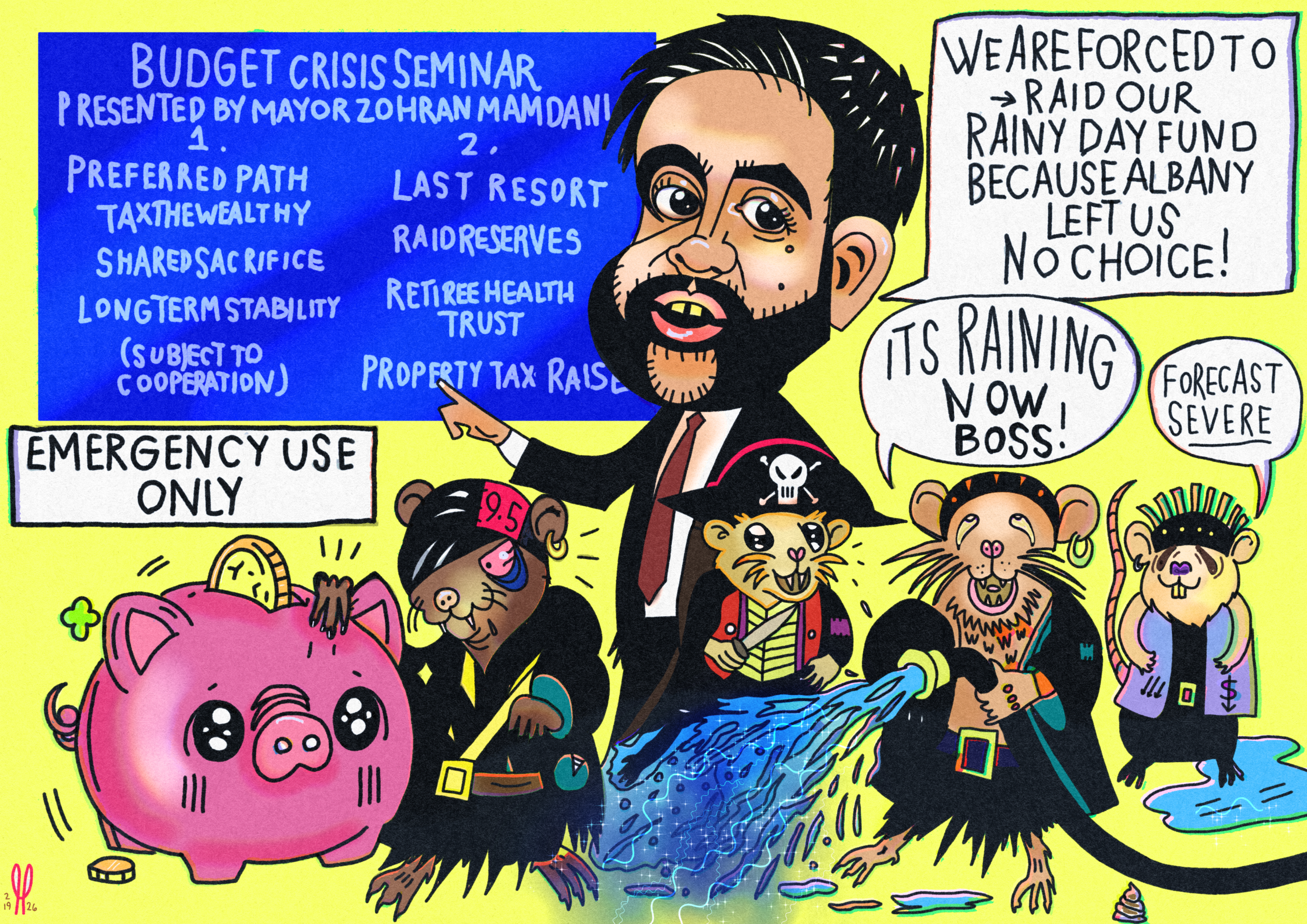
Today’s political cartoon presents a fictional “Budget Crisis Seminar.”
On the board:
Preferred Path
– Tax the Wealthy
– Shared Sacrifice
– Long-Term Stability
(Subject to Cooperation)
Last Resort
– Raid Reserves
– Retiree Health Trust
– Property Tax Increase
Behind the presentation, pirate-clad rats manufacture rain over a piggy bank marked “Emergency Use Only.”
“It’s raining now, boss.”
The satire asks a simple question:
Is it truly pouring
or is someone holding the hose? and is there really a rainy day coming?
Why This Matters
Political communication shapes public perception long before policies are enacted.
Who defines the emergency?
Who bears the cost?
Who is labeled uncooperative?
In fiscal policy, words matter as much as line items.
And sometimes the most revealing element of a budget debate isn’t the spreadsheet — it’s the forecast.
Maria Grasmick is a political cartoonist examining power, language, and fiscal policy through classical satire.
For my sketches go to my substack
https://mariagrasmick.substack.com/p/mayor-mamdani-says-hes-forced-to